
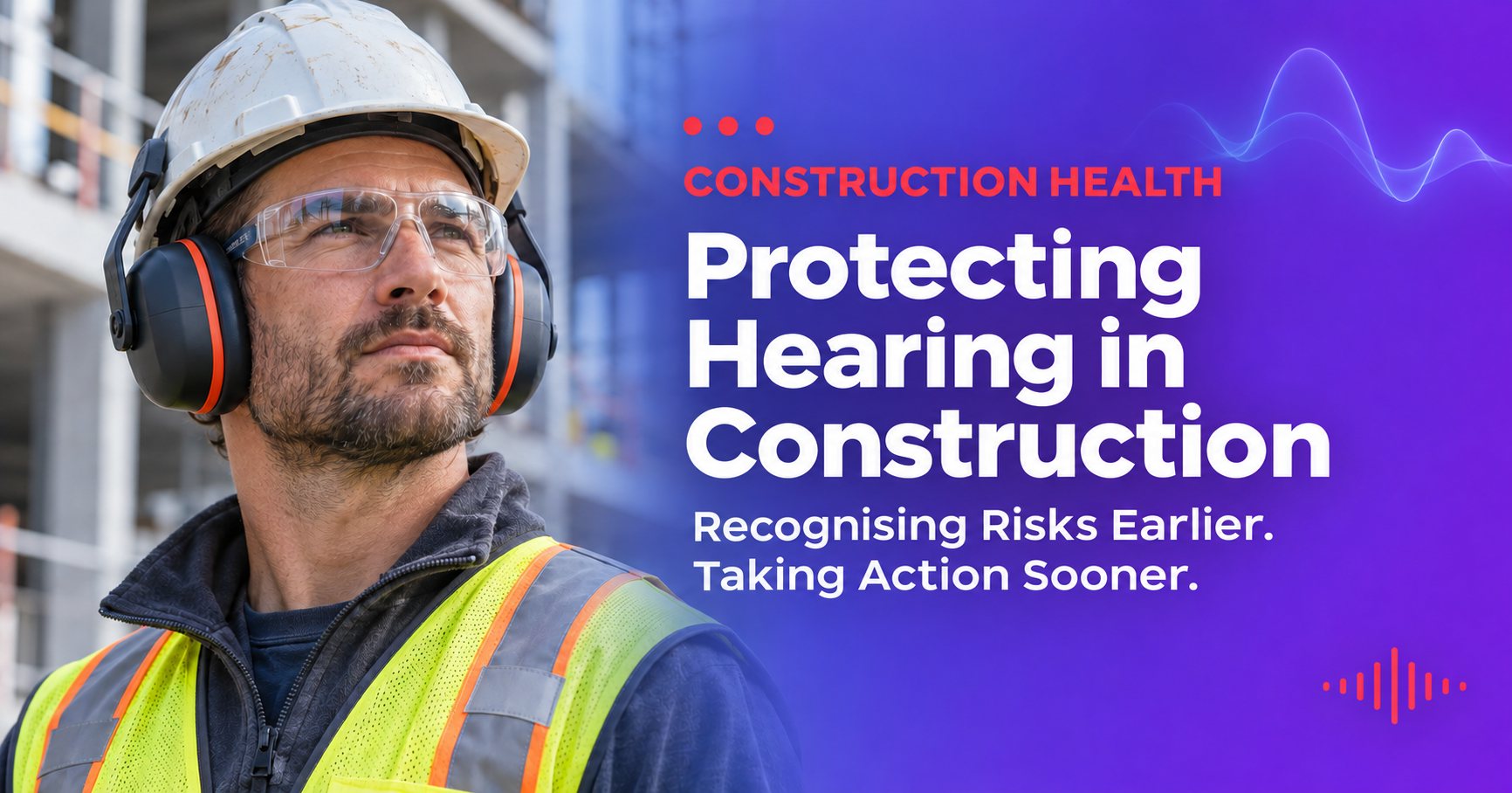
Imagine finishing a day on site and heading home. The machinery has stopped, but your ears are still ringing. At dinner, you ask someone to repeat themselves. You put it down to tiredness and expect things to feel normal by morning.
These moments can be easy to brush off. But ringing or muffled hearing after work can be a sign that noise exposure needs attention, even when your hearing seems to recover. Repeated exposure to hazardous noise can lead to permanent damage.
As an audiologist, I want hearing health to be part of everyday conversations about construction safety. Hearing matters when you are following instructions, talking with your workmates or sitting down with your family at the end of the day.
Why hearing changes can go unnoticed
Saws, grinders, drills and heavy machinery are familiar sounds on a construction site. When noise is part of your working day, it can start to feel normal.
Hearing damage often develops gradually. You may still hear someone speaking but struggle to make out their words, especially with machinery or other conversations in the background. Over time, this can affect your ability to follow instructions and hear warning signals.
You might notice yourself asking people to repeat things more often. Someone at home might mention that the television is louder than usual. These changes deserve attention rather than being dismissed as tiredness or getting older.
How much noise is too much?
Australian workplace noise exposure standards specify 85 dB(A) averaged over eight hours and 140 dB(C) for peak noise. The first considers noise exposure over time. The second addresses sudden, intense sound.
The louder the noise, the less exposure time it takes to reach the same daily dose. Safe Work Australia explains that exposure to 91 decibels for two hours is equivalent to 85 decibels for eight hours. A noisy task does not need to last all day to create a substantial risk.
One practical warning sign is needing to raise your voice to speak to someone a metre away. That does not tell you the exact noise level, but it is a reason to investigate and arrange a proper assessment where needed.
Some hearing risks are less obvious
Noise is not the only workplace hazard that can affect hearing.
Certain chemicals, including some solvents, can damage the hearing system. These are known as ototoxic substances. Exposure can occur through breathing them in, skin absorption or ingestion. When chemical exposure occurs alongside noise, the risk of hearing loss can increase.
For teams using paints, thinners, adhesives or degreasers, the specific products matter. Not every product presents the same risk.
Checking safety data sheets and seeking advice from an occupational hygienist can help employers understand these exposures together. It is worth asking whether your hearing protection program considers both the noise workers hear and the substances they handle.
What happens between hearing tests?
Regular hearing tests are an important part of workplace hearing care. Comparing results over time can help identify changes and guide further assessment.
Requirements vary by jurisdiction and circumstances. In Victoria, workers who need hearing protection to control exposure below the standard must receive audiometric testing within three months of starting the relevant work, and at least every two years.
But plenty can change between appointments.
A worker may move to another site, start using different equipment or spend more time near a noisy task. A test result from several months ago cannot tell us everything about their exposure today.
This is where I believe we need to pay closer attention. Are workers comfortable reporting ringing or muffled hearing? Do they know who to speak to? When someone raises a concern, is there a clear next step?
What employers can do now
As you review safety plans for 2027, start with the work happening on your site each day.
Look for opportunities to reduce noise at its source. Quieter equipment, proper maintenance, barriers and isolation should be considered before relying on earplugs or earmuffs. Review exposure when machinery, tasks or work areas change.
Check how hearing protection is being used. Providing it is only the beginning. Workers need suitable protection, a proper fit and practical guidance on wearing it consistently.
Make reporting hearing concerns straightforward. A worker who notices ringing after a shift should know who to tell and how to access support. Hearing test results should also come with an explanation and appropriate follow-up.
Why I founded Cicado Healthcare
I founded Cicado because access to hearing care should be easier, including for people working across different locations.
Cicado brings together virtual hearing screening, connected monitoring and clinical oversight to help organisations recognise concerns and arrange appropriate follow-up. Our aim is to make hearing health easier to understand and act on throughout the working year.
The value comes from what happens next. Exposure information should help teams improve controls. A hearing concern should lead to appropriate assessment. Screening supports this process alongside required audiometric testing and diagnostic care.
For me, this comes back to the person going home after their shift. I want them to hear their children clearly, enjoy conversations with friends and finish their working life with their hearing protected.
“Has anyone noticed ringing or muffled hearing after a shift, and do we know what to do when it happens?”
Give people time to answer. Their experience may reveal something your current safety program needs to address.